Laser technology
CO2, fiber or UV: which laser should you choose?
10 July 2026
Choosing the right type of laser for your activity is a crucial task that calls for some in-depth knowledge.
Don't panic! We are here to explain and guide you through the various possible choices.
1 — Fiber, UV or CO2 laser?
These are the three main laser families, each with its own preferred field.
1.1 — The fiber laser
Despite being invented in the 1960s, the fiber laser took four decades to become widespread, and is today an essential system for many industries.
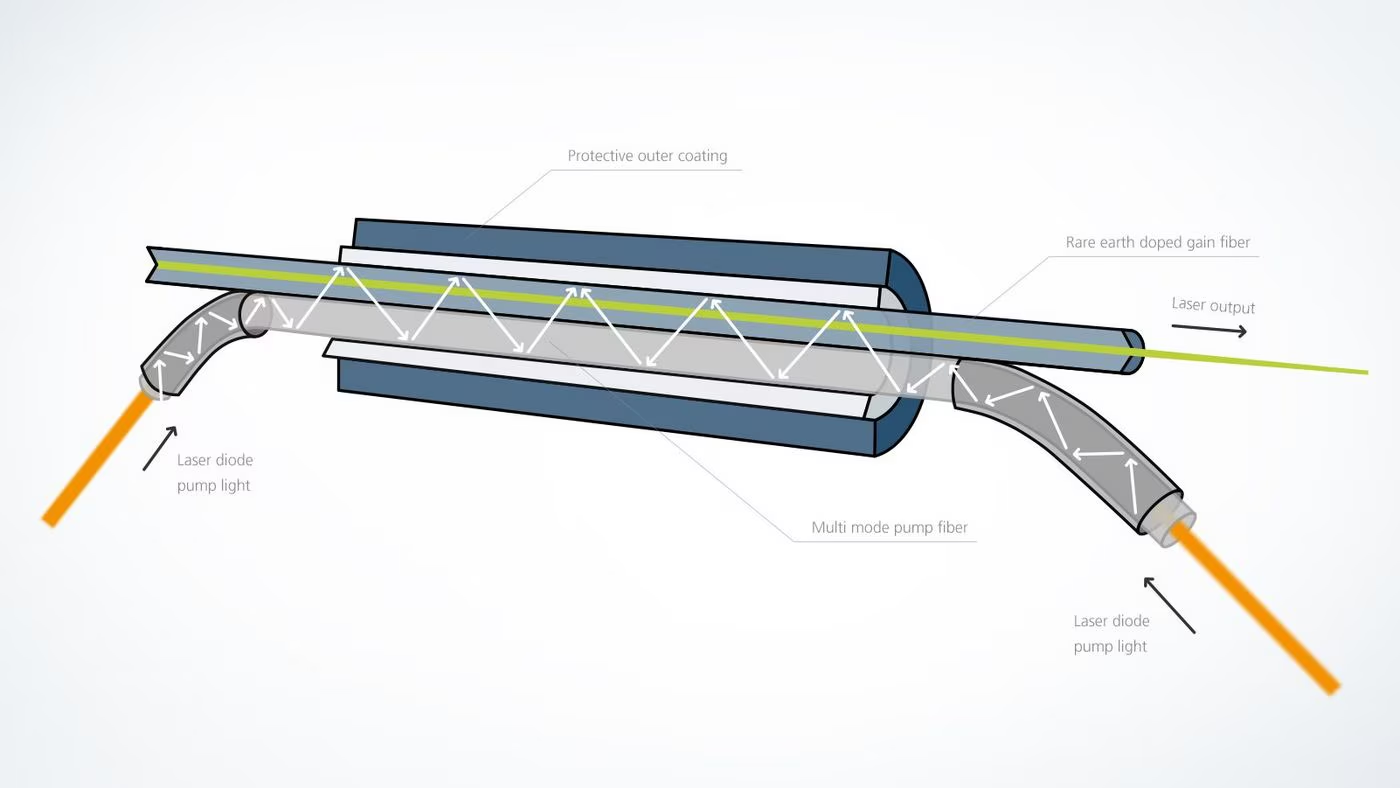
Its principle relies on charging a specific so-called "doped" optical fiber, which then releases this energy suddenly. This type of laser is not continuous and operates at a given frequency.
Its uses vary depending on its power:
- Low power (between 1 mW and 5 mW): light engraving, working wood or certain technical plastics.
- Medium power (between 5 mW and 100 W): all-material engraving, cutting very thin sheet metal. This is the most widely used laser class.
- High power (> 100 W): mainly used for sheet-metal cutting, machining and operations requiring significant material removal.
All fiber lasers work in pulses, at a high frequency. This mode of operation concentrates more energy on the engraving point.
Indeed, in engraving as in cutting, the laser does not melt the substrate but vaporizes it instantly. The energy density at the laser's focal point is so high that the material sublimates. This is known as ablation.
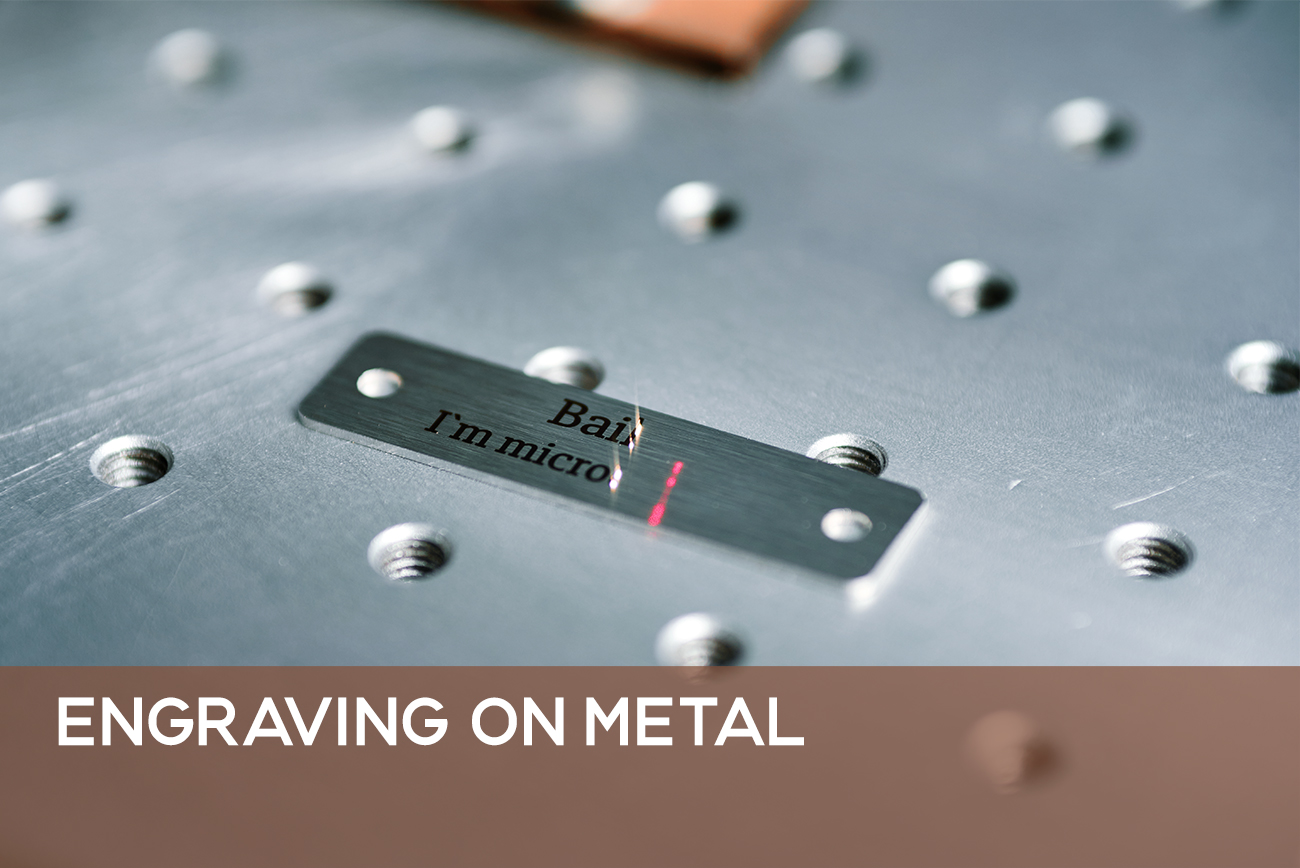
These characteristics give the fiber laser very high precision and a high execution speed, at the cost of more modest power compared with other systems.
In summary:
- suitable for all engraving needs, whatever the material;
- power sufficient for cutting thin metals;
- very high precision;
- high execution speed;
- power too low for cutting thick parts;
- wavelength unsuited to certain specific substrates.
1.2 — The UV laser
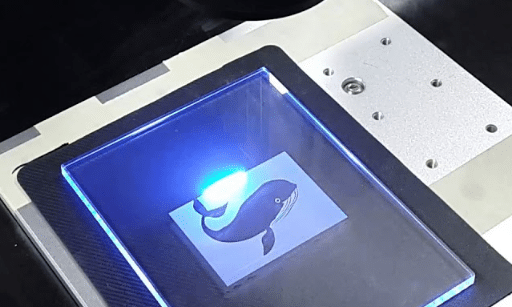
The UV laser works on the same principle as the fiber laser, with a few differences. The emitted laser is in the ultraviolet spectrum, unlike the fiber laser which is in the near infrared.
This brings several advantages. As the wavelength is shorter, the laser's focal point is also smaller. The beam is therefore more precise and more concentrated.
This results in high efficiency relative to the emitted power. Moreover, the extreme fineness of the beam allows finer control of the deposited energy, enabling very delicate work on fragile substrates.
It should be noted, however, that despite its superior efficiency, the UV laser has lower raw power than the fiber laser, for equal electricity consumption.
In summary:
- very fine engraving;
- better precision than the fiber laser;
- finer adjustment of the deposited energy, useful for example when marking very thin parts. Also the ability to microtexture certain materials;
- consumption similar to a fiber laser, for a lower emitted power;
- higher cost than the fiber laser, due to its complexity.
1.3 — The CO2 laser
The CO2 laser is completely different from fiber and UV lasers, both in how it works and how it is used.
Its principle relies on a gas tube containing CO2, nitrogen and a few rare gases. Exciting these gases produces a light beam which, once concentrated, forms a laser.
This system delivers very high power and produces a continuous beam in the far-infrared range. Available power ranges from 40 W to several hundred watts for industrial applications.
This high power, combined with a continuous beam, makes it the perfect type for cutting thick metals.
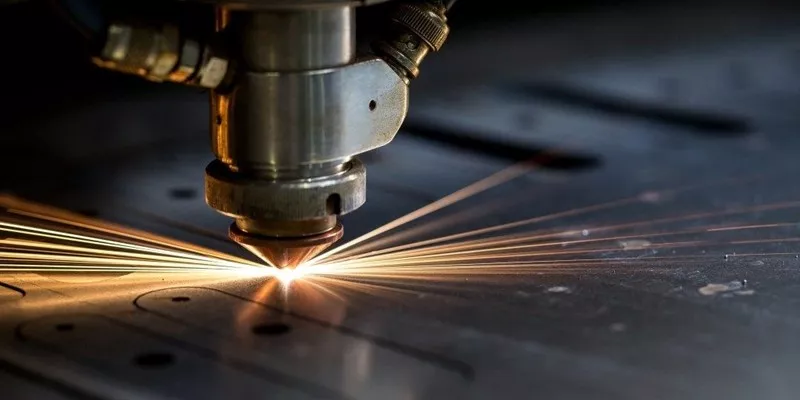
Note, however, that it is difficult to modulate the power precisely, and the speed is lower than fiber and UV types.
In summary:
- high power available continuously, ideal for cutting thick materials;
- simple to adjust compared with other laser types;
- more costly maintenance, less durable internal parts;
- inability to cut certain fragile materials, or those with low absorbance.
Discover our range of fiber laser machines and CNC machining centres designed for SMEs and small businesses.
Interested in one of the laser solutions offered? Unsure which is right for your business? Contact us!
We will be glad to advise you and to run product tests if needed.